Eating and drinking can become difficult for people with certain medical conditions. Some patients cannot swallow safely or cannot get enough nutrition through the mouth. In these situations, a doctor may recommend a feeding tube to help provide essential nutrition and fluids.
PEG Tube Placement in Islamabad is an important option for patients who need long-term nutritional support. PEG stands for percutaneous endoscopic gastrostomy. It is a procedure in which a feeding tube is placed through the skin of the abdomen into the stomach with the help of an endoscope.
This article explains how PEG tube placement works, who may need it, how feeding is managed, and what patients and caregivers should know about its risks.
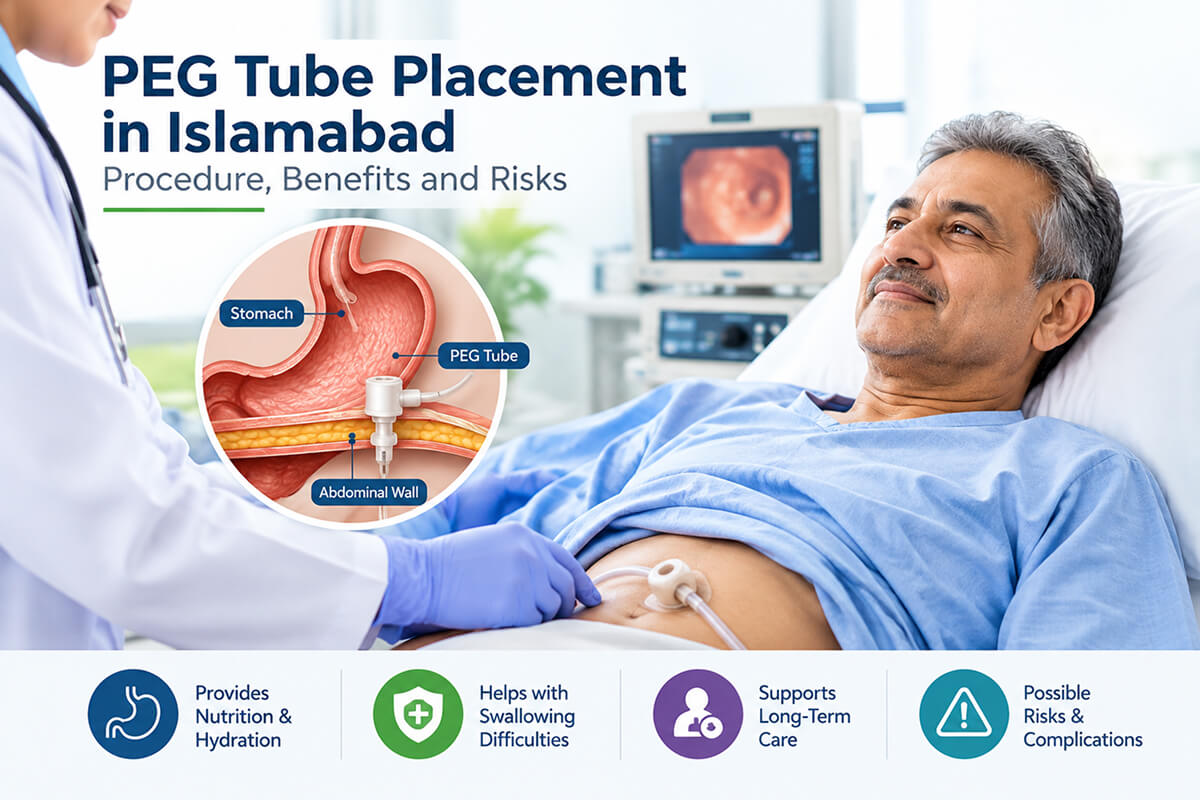
PEG tube placement is a medical procedure used to place a feeding tube directly into the stomach. The tube allows liquid nutrition, fluids and certain medicines to be given when a patient cannot swallow safely or cannot eat enough by mouth.
A PEG tube may be recommended for patients with neurological conditions, swallowing problems, or certain illnesses that affect their ability to maintain adequate nutrition.
The decision to place a feeding tube depends on the patient’s condition, nutritional needs, expected duration of support and overall treatment plan. A doctor will explain whether PEG is an appropriate option.
A doctor may consider a PEG feeding tube when a patient needs longer-term nutritional support. Possible situations include:
Not every patient with swallowing difficulties needs a PEG tube. The medical team assesses swallowing safety, nutritional status and other treatment options before recommending the procedure.
During the procedure, a doctor uses an endoscope, which is a thin, flexible instrument with a camera, to examine the upper digestive tract and guide the placement of the feeding tube.
The procedure generally involves these steps:
The procedure should be performed by appropriately trained medical professionals in a suitable clinical setting. The exact approach and recovery plan may vary between patients.
After PEG tube placement, the healthcare team will explain when feeding can begin and how to use the tube safely. Feeding usually involves specially prepared liquid nutrition, with the type and amount selected according to the patient’s needs.
Patients and caregivers should learn how to handle the tube, maintain cleanliness around the insertion site and follow the prescribed feeding schedule.
Some patients may still be able to eat or drink by mouth, but others may need to avoid oral intake because of swallowing risks. Only the treating healthcare team can advise whether eating and drinking by mouth are safe.
Do not change the feeding schedule, tube position or medicines without professional guidance.
PEG tube placement can provide important nutritional support, but it also carries risks. Possible complications include:
Contact a healthcare professional if the patient develops increasing pain, fever, worsening redness, unusual leakage or bleeding. If the tube comes out, seek urgent medical advice because the opening can close and the tube may need prompt replacement by a trained professional.
Severe abdominal pain, heavy bleeding, breathing difficulty or signs of serious illness require emergency assessment.
A PEG tube may remain in place for months or longer, depending on the patient’s condition and the type of tube used. It may require replacement if it becomes damaged, blocked or displaced.
The tube can sometimes be removed when it is no longer needed and the medical team confirms that the patient can maintain adequate nutrition safely. Removal and replacement should be planned with qualified healthcare professionals.
Patients and caregivers should never attempt to remove or replace a PEG tube themselves.
If a family member has difficulty swallowing, unexplained weight loss or trouble maintaining adequate nutrition, arrange a medical assessment. Early evaluation can help identify the cause and determine the most appropriate nutritional support.
At Islamabad Gastroenterology Associates (IGA), patients can learn about available digestive health services, including PEG tube placement.
For more information about consulting a digestive health specialist, read this guide from Professor Muzaffar Latif Gill.
PEG tube placement is a procedure that places a feeding tube through the abdominal wall into the stomach to provide nutrition, fluids and certain medicines.
Patients who cannot swallow safely or cannot get enough nutrition by mouth may need a PEG tube. A doctor assesses each patient’s needs before recommending it.
It is an endoscopy-guided procedure that creates an opening through the abdominal wall into the stomach. It is generally performed without traditional open surgery.
Some patients may continue eating by mouth if their doctor confirms it is safe. Others may need to receive nutrition through the tube only.
Possible risks include infection, bleeding, pain, leakage, tube displacement, aspiration and, rarely, injury to nearby organs.
The duration varies according to the patient’s condition and nutritional needs. A healthcare professional decides when replacement or removal is appropriate.
Visit Islamabad Gastroenterology Associates to learn about the procedure and arrange a consultation.
Book a consultation to discuss the patient’s swallowing difficulties, nutritional needs and possible treatment options with a qualified medical professional.
