We often think of the liver and heart as two separate organs, each with its own function. However, research shows that these organs are closely connected. This relationship is known as the Liver-Heart Axis. It explains how liver health and heart health may influence each other through metabolism, inflammation, and substances circulating in the blood.
This connection is particularly important for people with fatty liver disease, obesity, diabetes, or high blood pressure. Understanding the liver-heart axis can help patients and healthcare professionals take a more complete approach to long-term health.
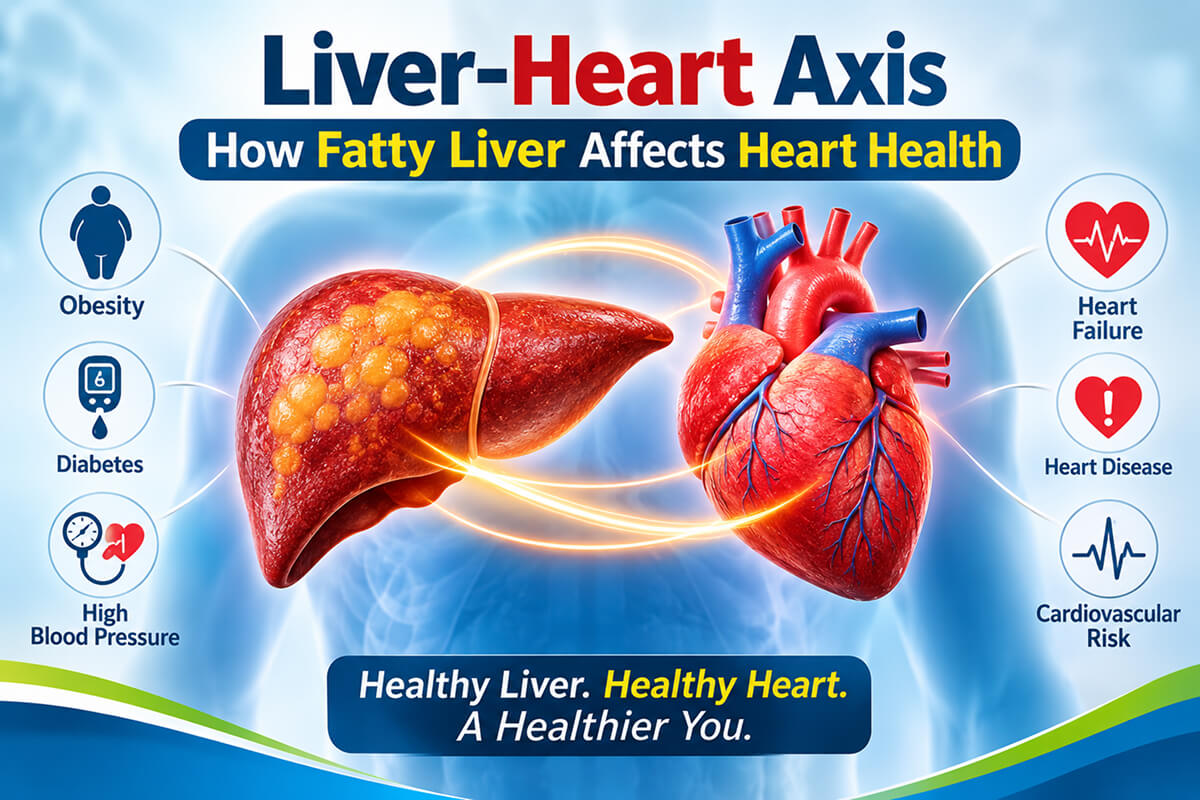
The liver performs many important functions. It processes nutrients, stores energy, regulates fats and blood sugar, and removes waste from the body. The heart pumps blood throughout the body, delivering oxygen and nutrients to different organs.
Although these organs have different jobs, they communicate through the bloodstream and share several metabolic processes.
When the liver develops metabolic problems, it may release inflammatory substances and other signals that can influence different parts of the body, including the heart. Similarly, when the heart does not pump blood effectively, increased pressure or reduced circulation can affect liver function.
This two-way relationship is called the liver-heart axis.
Metabolic dysfunction-associated steatotic liver disease (MASLD), previously known as non-alcoholic fatty liver disease (NAFLD), occurs when excess fat builds up in the liver in association with metabolic risk factors.
Common risk factors include:
Many people with fatty liver disease do not experience noticeable symptoms, especially in the early stages. However, some patients may develop liver inflammation and scarring over time.
Fatty liver should not be considered only a liver-related problem. Research has linked MASLD with increased cardiovascular risk.
You can learn more about metabolic syndrome and its health risks through Islamabad Gastroenterology Associates.
The relationship between fatty liver and heart disease involves several shared risk factors and possible biological mechanisms.
Obesity and insulin resistance can affect how the body processes sugar and fats. These metabolic changes may contribute to fat accumulation in the liver and increase cardiovascular risk.
People with these conditions may also have high blood pressure and abnormal cholesterol levels, which can place additional strain on the heart.
Read more about obesity treatment and weight management to understand why a complete approach to metabolic health is important.
Chronic, low-grade inflammation is another possible link between liver and heart problems.
In metabolic diseases, inflammatory processes may affect both organs. Researchers are investigating how these processes contribute to liver damage, changes in blood vessels, and problems with heart function.
The liver produces and releases different substances into the bloodstream. Some of these are known as hepatokines.
Scientists are studying whether these liver-derived signals can influence heart muscle function, inflammation, and the development of heart disease.
Although this research is promising, the exact role of many of these signals in human disease is still being investigated.
A research article published in the European Heart Journal in 2026 discusses the connection between metabolic liver disease and metabolic heart failure.
The article highlights an association between MASLD and a condition called heart failure with preserved ejection fraction (HFpEF).
In HFpEF, the heart can pump blood out with a relatively preserved ejection fraction, but the heart muscle has difficulty relaxing and filling properly.
Researchers involved in the INTERACT consortium are investigating how the liver and heart communicate through circulating substances, including metabolites and inflammatory markers.
Their goal is to understand the mechanisms connecting these conditions and identify potential biomarkers that may help improve early risk assessment.
This research encourages healthcare professionals to consider the health of multiple organs rather than assessing each condition separately.
Cardiovascular disease is an important health concern for people with MASLD. Shared risk factors such as diabetes, obesity, high blood pressure, and abnormal blood fats can increase the risk of complications.
People diagnosed with fatty liver should discuss their overall metabolic and cardiovascular health with their healthcare professionals.
Depending on individual risk factors, doctors may recommend:
For patients with high cholesterol and fatty liver, understanding statins and liver disease is also important. Patients should not start or stop cholesterol medicines without medical advice.
Healthy lifestyle habits can support both liver and cardiovascular health.
Maintain a healthy weight: Gradual and sustainable weight management may improve metabolic health and reduce liver fat in many patients.
Choose a balanced diet: Include vegetables, fruits, whole grains, and suitable sources of protein. Limit sugary drinks, highly processed foods, and excessive saturated fats.
Stay physically active: Regular walking, cycling, swimming, or other suitable exercise can improve overall metabolic health.
Manage diabetes and blood pressure: Follow your doctor’s advice and take prescribed medicines as directed.
Avoid smoking: Smoking increases cardiovascular risk and can negatively affect overall health.
For more information about liver health and liver biopsy, visit the ProfGill patient education website.
You can also learn about hepatitis prevention and liver health. Preventing viral hepatitis is another important part of protecting the liver.
A doctor may recommend blood tests, ultrasound, or other investigations depending on the patient’s condition.
A FibroScan is a non-invasive test that measures liver stiffness and can help assess liver fibrosis. It can also provide information about liver fat using an appropriate measurement.
Learn more about FibroScan testing for liver health assessment and the available gastroenterology and hepatology services at IGA.
Not every patient needs the same tests. A specialist can recommend suitable investigations based on medical history, symptoms, and individual risk factors.
For additional patient education, explore the ProfGill Blog and learn more about digestive and liver health.
The liver-heart axis describes the two-way relationship between the liver and heart. These organs communicate through blood circulation, metabolic processes, and biological signals.
Fatty liver disease, particularly MASLD, is associated with an increased risk of cardiovascular disease. Shared metabolic risk factors and inflammation may contribute to this relationship.
Research has found an association between MASLD and heart failure, including heart failure with preserved ejection fraction (HFpEF). Scientists are investigating the mechanisms behind this connection.
Yes. Heart failure can increase pressure in the veins and cause blood to build up in the liver. Reduced blood supply can also contribute to liver injury in some situations.
Maintain a healthy weight, eat a balanced diet, exercise regularly, avoid smoking, and manage conditions such as diabetes, high blood pressure, and high cholesterol.
People with fatty liver should discuss cardiovascular risk assessment with their doctor. The need for specific heart tests depends on their symptoms, medical history, and risk factors.
Your liver and heart are closely connected, and taking care of both is important for long-term health. If you have fatty liver, abnormal liver tests, diabetes, or concerns about your digestive and metabolic health, seek professional medical guidance.
Book an Online Consultation with Islamabad Gastroenterology Associates to discuss your concerns and receive appropriate evaluation and treatment advice.
Medical Disclaimer: This article is for general information only and does not replace professional medical advice, diagnosis, or treatment.
