pylori and IBD are two digestive health topics that researchers are studying to understand how bacteria may affect the gut. Some studies have found that Helicobacter pylori infection is less common in people with inflammatory bowel disease (IBD). However, this does not mean that H. pylori prevents IBD. Understanding the possible connection can help patients make informed decisions about their digestive health.
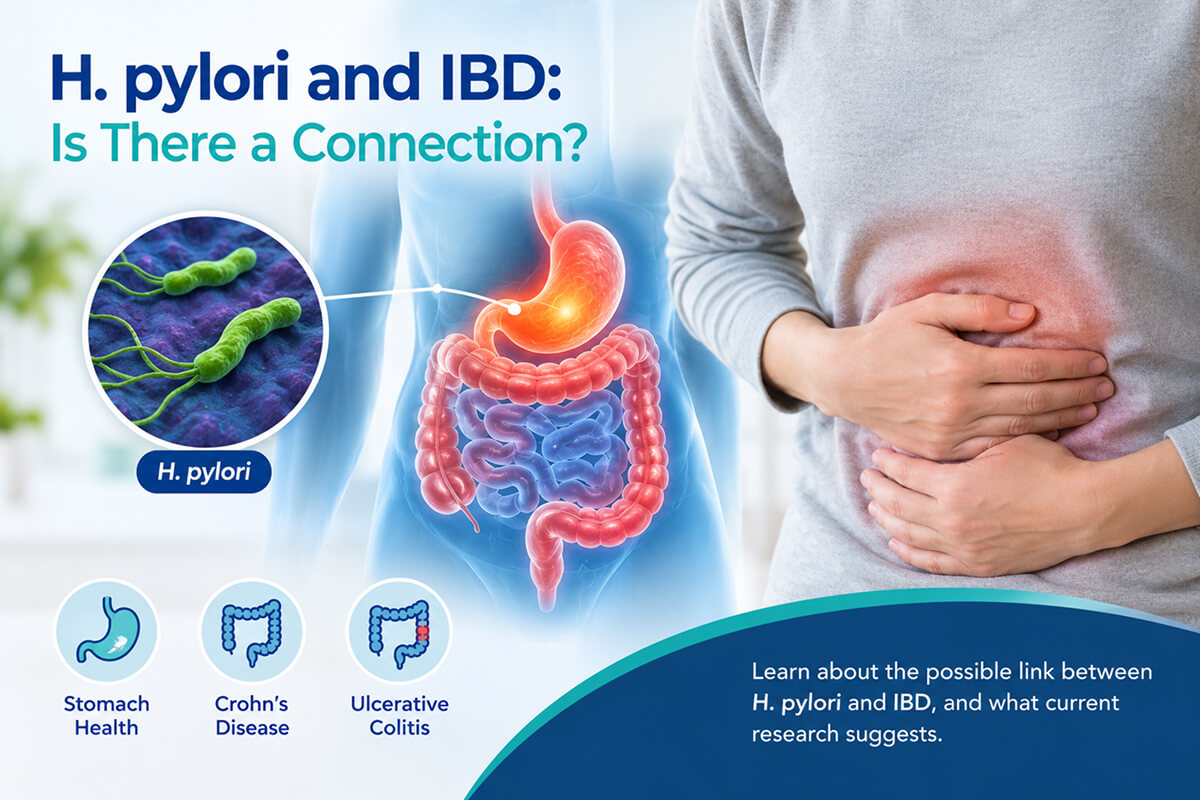
Helicobacter pylori, commonly called H. pylori, is a type of bacteria that can live in the stomach lining. It is a common infection worldwide and may spread through contaminated food, water, or close contact in some circumstances.
Many people with H. pylori do not experience noticeable symptoms. Others may develop upper abdominal discomfort, bloating, nausea, or indigestion. The infection can cause inflammation of the stomach lining and may lead to stomach or duodenal ulcers. Long-term infection is also associated with an increased risk of certain types of stomach cancer.
Doctors can test for H. pylori using a urea breath test, stool antigen test, or other appropriate investigations. Islamabad Gastroenterology Associates offers information about digestive investigations, including its urea breath test and gastroenterology services.
If an infection is confirmed, a doctor may prescribe a combination of medicines, including antibiotics and acid-reducing treatment. Patients should complete treatment as directed and undergo a recommended follow-up test to confirm whether the infection has cleared.
Inflammatory bowel disease (IBD) is a group of long-term conditions that cause inflammation in the digestive tract. The two main types are Crohn’s disease and ulcerative colitis.
Crohn’s disease can affect different parts of the digestive tract, from the mouth to the anus. It may cause abdominal pain, diarrhoea, weight loss, tiredness, and nutritional problems.
Ulcerative colitis mainly affects the large intestine and rectum. Common symptoms include repeated diarrhoea, blood in the stool, abdominal cramps, and an urgent need to use the toilet.
IBD is different from irritable bowel syndrome (IBS). IBS can cause abdominal pain and changes in bowel habits, but it does not cause the same type of intestinal inflammation seen in IBD.
The exact cause of IBD is not fully understood. Researchers believe that immune system activity, genetics, environmental factors, and the gut microbiome may all play a role.
Research has found an interesting association between H. pylori infection and IBD. Some systematic reviews have reported that H. pylori is less common among people with IBD than among people without the condition.
Scientists are investigating several possible explanations. One theory is that H. pylori may influence the immune system in ways that affect inflammation. Another possibility is that antibiotic use, environmental exposures, age, or differences in gut bacteria may help explain the association.
However, these findings do not establish that H. pylori prevents Crohn’s disease or ulcerative colitis. Researchers are still studying whether the relationship is direct or influenced by other factors.
It is also important to understand that H. pylori mainly affects the stomach, while IBD involves inflammation in the intestines. They are different conditions, and having one does not automatically mean a person will develop the other.
H. pylori should not be deliberately acquired or left untreated in the hope of preventing IBD. The infection can cause ulcers and increase the risk of serious stomach complications.
If a person has IBD and tests positive for H. pylori, the doctor can assess the need for treatment based on the patient’s symptoms, test results, medical history, and other risk factors.
Patients should not take antibiotics without medical advice. Unnecessary antibiotic use can cause side effects and contribute to antibiotic resistance. People taking medicines for Crohn’s disease or ulcerative colitis should tell their doctor about all their current medications before starting H. pylori treatment.
For more information about digestive health and specialist care, visit Islamabad Gastroenterology Associates or explore the ProfGill Blog for additional patient education.
Consult a gastroenterologist if you experience persistent abdominal pain, ongoing diarrhoea, unexplained weight loss, blood in your stool, or recurring digestive problems. A specialist can review your symptoms and recommend appropriate tests.
Depending on your symptoms, investigations may include stool tests, blood tests, an H. pylori test, colonoscopy, or other examinations. Not every patient needs every test; the choice depends on the clinical assessment.
Seek urgent medical attention if you have severe abdominal pain, vomiting blood, black tarry stools, or signs of significant bleeding.
There is no established evidence that H. pylori directly causes IBD. Researchers are studying the association, but the exact relationship remains uncertain.
Some studies have found lower rates of H. pylori infection among people with Crohn’s disease. This association does not prove that the bacteria provides protection.
Research has investigated a possible relationship between H. pylori and ulcerative colitis. However, current evidence does not establish that H. pylori prevents or treats ulcerative colitis.
Doctors may use a urea breath test or stool antigen test to detect an active infection. Other tests may be appropriate depending on the patient’s condition.
If testing confirms H. pylori, discuss the results with your doctor. Treatment decisions should be based on your individual medical needs, not on the hope that the infection will affect IBD.
If you have persistent digestive symptoms or concerns about H. pylori, Crohn’s disease, or ulcerative colitis, seek advice from a qualified gastroenterologist.
Book an Online Consultation with Islamabad Gastroenterology Associates to discuss your symptoms and suitable diagnostic or treatment options.
