Have you ever experienced pain in your stomach, swelling, or discomfort after eating? Your doctor may recommend an abdominal ultrasound to check the organs inside your abdomen.
An abdominal ultrasound is a common medical test that uses sound waves to create pictures of organs inside the body. It helps doctors examine the liver, gallbladder, pancreas, kidneys, and other abdominal organs.
The test is safe, does not use X-ray radiation, and is usually painless. In this article, we explain why doctors recommend an ultrasound scan, how it is performed, and how to prepare for it.
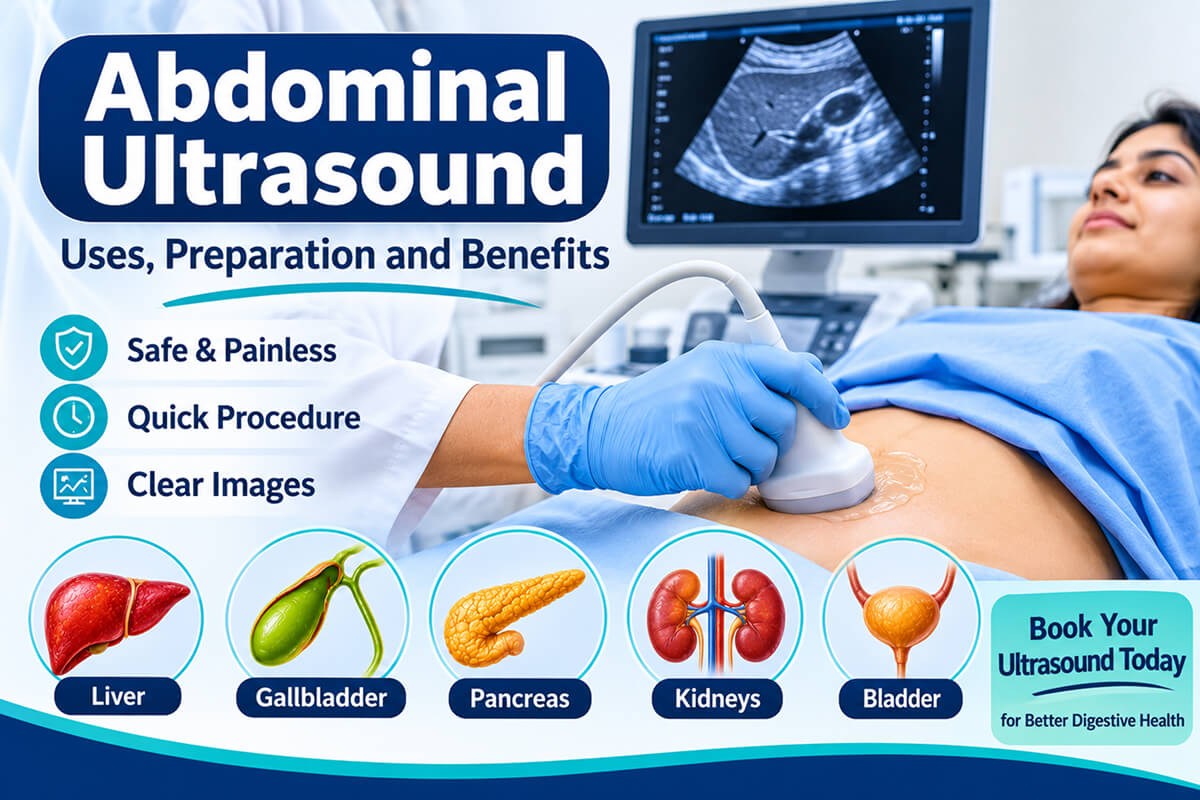
An abdominal ultrasound, also called abdominal sonography, is a medical imaging test. It uses high-frequency sound waves to create images of organs inside the abdomen.
During the test, a healthcare professional moves a small device called a transducer over your skin. A special gel is applied to help the device send and receive sound waves.
The images appear on a screen, allowing the doctor to examine different organs and look for possible problems.
At Islamabad Gastroenterology Associates, abdominal and liver ultrasound services are available for evaluating digestive and liver-related conditions.
Doctors may recommend an ultrasound if you have abdominal pain, swelling, or other symptoms that need further investigation.
It can help examine several organs.
A liver ultrasound helps doctors check the size, shape, and appearance of the liver. It may help identify fatty changes, cysts, masses, and signs that need further investigation.
People with fatty liver disease, hepatitis, or abnormal liver blood tests may need imaging as part of their assessment.
You can also read about liver biopsy and how doctors assess liver conditions.
An ultrasound can help detect gallstones and examine the gallbladder. Gallstones may cause pain in the upper right side of the abdomen, particularly after meals.
If you experience repeated abdominal pain, your doctor may recommend this scan.
The pancreas is an organ located behind the stomach. An abdominal ultrasound may help examine it for visible changes, swelling, or other abnormalities.
However, some parts of the pancreas may be difficult to see because of gas in the intestines. Your doctor may recommend another imaging test if needed.
An ultrasound can examine the kidneys and bladder. It may help identify kidney stones, swelling, cysts, or problems with urine flow.
Depending on the type of scan, doctors may also examine the spleen, blood vessels, and other structures inside the abdomen.
An abdominal ultrasound can help doctors investigate several health conditions, including:
It is important to understand that an ultrasound cannot detect every disease. Some conditions require blood tests, CT scans, MRI, FibroScan, or other investigations.
For more information, explore FibroScan testing for liver health.
An abdominal ultrasound is a simple procedure. It usually takes around 15 to 30 minutes, although the time can vary.
Here is what generally happens:
The scan does not normally cause pain. You may feel slight pressure when the device is moved over your abdomen.
Preparation depends on which organs need to be examined.
For some abdominal ultrasound scans, your doctor may ask you not to eat or drink for several hours before the appointment. This can help produce clearer images of the gallbladder and upper abdominal organs.
If your bladder needs to be examined, you may be asked to drink water and avoid urinating before the scan.
Before your appointment:
Do not start fasting or stop prescribed medicines without checking the instructions for your specific scan.
You can find more patient information on liver and digestive health through the ProfGill patient education blog.
Yes. Ultrasound uses sound waves instead of ionising radiation. It is generally considered a safe imaging method when performed by trained healthcare professionals.
It is also commonly used during pregnancy when an ultrasound examination is medically needed.
Your doctor will decide whether an ultrasound is suitable for your symptoms and medical condition.
No. It is usually painless. You may feel mild pressure as the transducer moves over your abdomen.
Sometimes. Your doctor may ask you to fast before a liver, gallbladder, or upper abdominal scan. Follow the instructions given by your imaging centre.
Yes. An abdominal ultrasound can show signs of fatty changes in the liver. However, it cannot accurately measure the amount of liver fat or determine the degree of liver scarring.
Yes. Abdominal ultrasound is commonly used to detect gallstones in the gallbladder.
Most examinations take around 15 to 30 minutes. The time depends on the organs being examined.
Ultrasound does not use ionising radiation and is commonly used during pregnancy when medically indicated. Your doctor can advise you about the appropriate examination.
If you have repeated abdominal pain, bloating, suspected fatty liver, or other digestive problems, consult a qualified gastroenterologist.
At Islamabad Gastroenterology Associates, patients can discuss their symptoms and medical reports and receive guidance about suitable investigations, including abdominal and liver ultrasound.
Book an Online Consultation with Islamabad Gastroenterology Associates to discuss your digestive and liver health concerns.
Medical Disclaimer: This article is for general information only and does not replace professional medical advice, diagnosis, or treatment.
