If you or a loved one is struggling with Ulcerative Colitis or Inflammatory Bowel Disease (IBD), this article is for you. International medical guidelines have shifted significantly in recent years, and if your treatment is still following the old approach, you may be missing out on modern, more effective, and lower side-effect options.
In this article, we break down the latest treatment guidelines available through Expert Gastroenterology Services in Islamabad, so you can have the right conversation with your gastroenterologist.
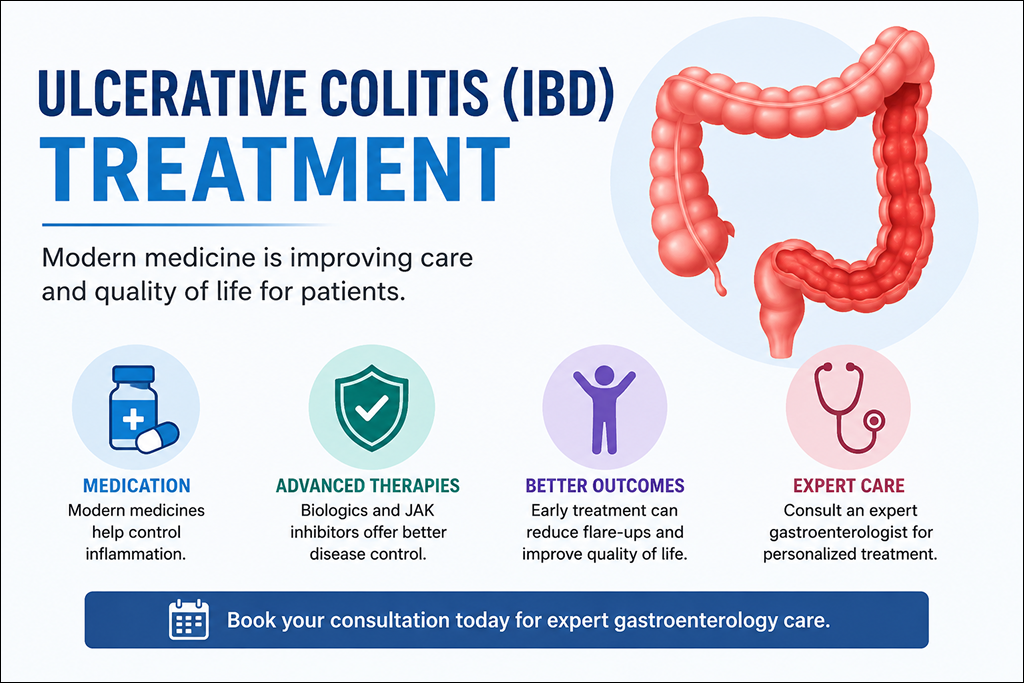
Ulcerative Colitis is a type of Inflammatory Bowel Disease (IBD) that causes inflammation and ulcers in the lining of the large intestine (colon) and rectum. It is one of the two main forms of IBD, the other being Crohn’s disease. Unlike Crohn’s, which can affect any part of the digestive tract, Ulcerative Colitis is limited to the colon and rectum, and the inflammation is typically continuous rather than patchy.
The disease can appear at any age, though it’s most commonly diagnosed in people between their late teens and early forties. It tends to follow a pattern of flare-ups followed by periods of remission, and its severity can range from mild to life-threatening.
Common symptoms include:
If these symptoms persist for more than a couple of weeks, it’s important to consult a qualified gastroenterologist promptly rather than waiting for symptoms to resolve on their own.
A whole generation of doctors treated Ulcerative Colitis with heavy-dose steroids and acetylsalicylic acid-based drugs such as Mesalamine and Pentasa. This approach worked in the short term, reducing inflammation quickly during flare-ups, but long-term steroid use can cause significant side effects, including:
Many patients ended up cycling in and out of steroid courses for years, which meant the underlying inflammation was never truly brought under control; it was simply suppressed temporarily, only to flare again once the steroid dose was tapered.
Warning: Steroids should not be used long-term without close medical supervision. They are meant as a short-term “bridge therapy,” not a permanent solution.
The treatment landscape has changed considerably. Under the latest guidelines:
Following diagnosis, doctors now start with a low dose of steroids and introduce biologics early on protecting the patient from long-term steroid side effects while still achieving disease control. This “treat-to-target” approach focuses on healing the colon lining, not just easing symptoms.
Biologics are typically given as injections or infusions that target specific inflammatory pathways in the body, rather than suppressing the immune system broadly. This targeted mechanism means fewer systemic side effects compared to steroids, and biologics can also help heal the intestinal lining over time, reducing the risk of complications and hospitalization.
JAK Inhibitors (Janus Kinase Inhibitors) are a newer generation of oral tablets that act quickly and bring the disease under control without prolonged steroid use. They work by blocking specific signals inside immune cells that drive inflammation. Being oral, they’re also more convenient for patients who prefer not to have regular injections or infusions, and they tend to show clinical improvement faster than some biologics.
For patients with extensive ulceration and severe inflammation sometimes requiring hospitalization modern practice avoids heavy, prolonged steroid doses. Instead, short-term agents such as Azathioprine (Imuran) or Cyclosporine may be used for the first two to three weeks to bring the acute flare under control, followed by a shift to biologics or JAK inhibitors for long-term maintenance. This staged approach reduces the cumulative steroid exposure that used to be standard practice.
Delaying proper treatment can allow inflammation to cause lasting damage to the colon, increasing the risk of complications such as strictures, severe bleeding, or in rare, advanced cases the need for surgery. Early, guideline-based treatment can:
Regular follow-up with a gastroenterologist including periodic blood tests, stool markers, and occasionally colonoscopy is essential to monitor disease activity and adjust treatment before a small flare becomes a major one.
Patients with IBD and Ulcerative Colitis in Islamabad now have access to Expert Gastroenterology Services built around these latest international guidelines. Dr. Muzaffar Latif Gill, an experienced gastroenterologist in Islamabad, creates individualized treatment plans based on each patient’s disease severity, age, and overall health rather than applying a one-size-fits-all steroid protocol.
If you’re searching for the best gastroenterologist in Islamabad who uses a modern, evidence-based approach from biologics to JAK inhibitors, an expert consultation can make a real difference in how quickly your disease is brought under control and how well it stays there.
Living with Ulcerative Colitis doesn’t mean living with constant flare-ups and steroid side effects. With early diagnosis and modern IBD treatment, most patients can achieve long-term disease control and a much better quality of life.
If you or someone close to you is experiencing symptoms of Ulcerative Colitis or IBD, don’t delay. Timely diagnosis and modern treatment can keep the disease well under control.
Book Your Online Consultation / Appointment Now with Dr. Muzaffar Latif Gill — Islamabad’s trusted name in Gastroenterology.
Call our clinic today or fill out the online appointment form to schedule your visit.
1. Is Ulcerative Colitis curable?
It’s a chronic condition managed through long-term remission, not a one-time cure; modern biologics and JAK inhibitors help achieve this effectively.
2. Biologics vs. JAK Inhibitors — what’s the difference?
Biologics are injectable and target specific immune pathways; JAK inhibitors are oral tablets with faster onset but require their own monitoring.
3. Should steroids be stopped completely?
No they’re a short-term bridge therapy, but guidelines now recommend tapering them quickly in favor of biologics or JAK inhibitors.
4. When should I see a doctor?
If you have diarrhea (especially with blood), abdominal pain, or weight loss lasting more than two weeks, consult a gastroenterologist immediately.
5. Where can I find expert IBD care in Islamabad?
Dr. Muzaffar Latif Gill offers modern, guideline-based Ulcerative Colitis and IBD treatment in Islamabad, including biologics and JAK inhibitors.
