Every year, World Hepatitis Day is observed on July 28 to raise awareness about viral hepatitis and encourage people to take action for better liver health. Hepatitis can affect the liver and, in some cases, lead to serious complications such as cirrhosis and liver cancer.
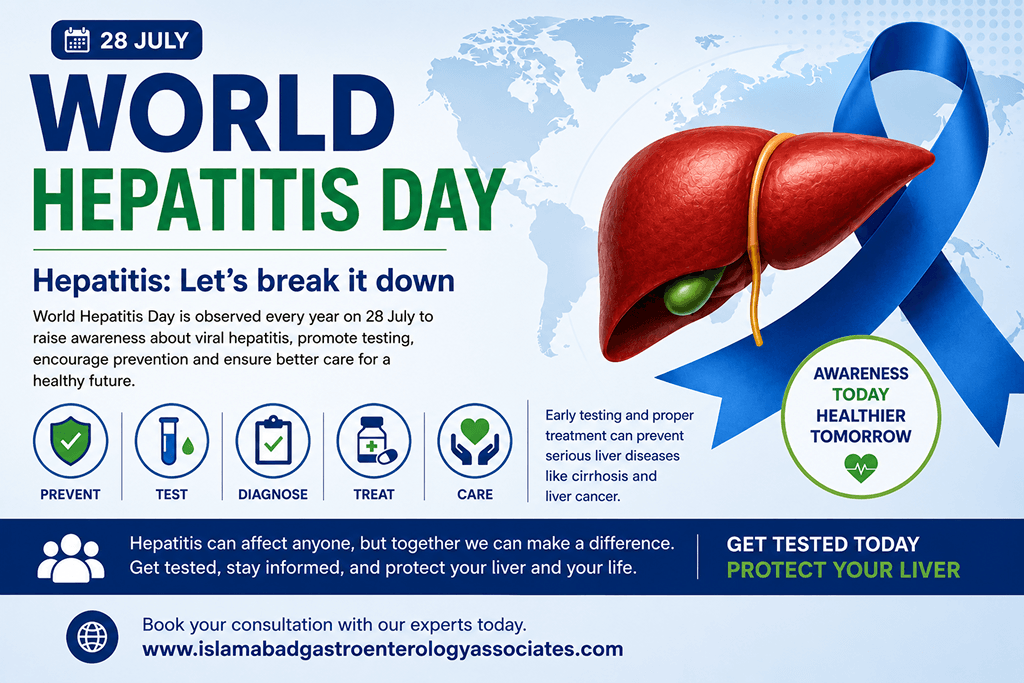
The World Hepatitis Day 2026 theme is “Hepatitis: Let’s break it down.” The campaign focuses on removing barriers that prevent people from accessing hepatitis prevention, testing, treatment, and care.
For people in Pakistan, hepatitis awareness is especially important. Many people may have hepatitis without obvious symptoms for years. Regular testing, medical advice, and timely treatment can help identify the infection before significant liver damage occurs.
Hepatitis means inflammation of the liver. Viral hepatitis is caused by viruses that can affect liver function and may cause short-term or long-term illness.
The major types of viral hepatitis include:
Hepatitis A and E are commonly associated with contaminated food or water, while hepatitis B, C, and D can be transmitted through infected blood or other body fluids.
Hepatitis B and C are particularly important because chronic infection can cause progressive liver damage. WHO reports that chronic hepatitis B and C caused approximately 1.3 million deaths globally in 2024.
World Hepatitis Day provides an opportunity to educate communities about hepatitis and encourage people to seek testing and treatment when appropriate.
The day also highlights an important fact: hepatitis can often be prevented, diagnosed, and managed with existing medical tools. WHO’s 2026 campaign calls for better access to vaccines, diagnostics, treatment, and care.
Awareness can help people understand:
Hepatitis B and Hepatitis C can become chronic infections. One of the major challenges is that a person may not feel sick during the early stages.
Possible symptoms can include:
However, symptoms alone cannot confirm hepatitis. A person can have hepatitis without noticeable symptoms. Blood tests and medical evaluation are important for diagnosis.
If you are concerned about your liver health, you can consult a specialist through gastroenterology and liver disease care in Pakistan for appropriate evaluation and guidance.
The exact tests depend on the suspected type of hepatitis and the patient’s medical history.
Doctors may recommend blood tests to check for viral markers, liver enzymes, antibodies, or other indicators of infection. Additional tests may be recommended when a doctor needs more information about liver health.
For patients with liver disease, a Fibroscan may also be useful in assessing liver stiffness and the degree of liver fibrosis. Islamabad Gastroenterology Associates lists Fibroscan among its liver-related diagnostic services.
Testing should be interpreted by a qualified healthcare professional. A positive result does not mean every patient has the same condition or requires the same treatment.
Prevention depends on the type of hepatitis.
Vaccination is an important way to prevent hepatitis A and hepatitis B in appropriate individuals. Hepatitis B vaccination is particularly important for preventing infection and reducing the long-term burden of hepatitis B.
Using properly sterilized medical equipment and ensuring safe blood and blood-product practices can reduce the risk of blood-borne hepatitis.
Items such as razors and toothbrushes may come into contact with blood. Avoiding the sharing of these personal items can help reduce potential exposure.
Never share needles or injection equipment. Medical procedures should always use sterile, properly handled equipment.
Pregnant women should discuss hepatitis screening with their healthcare provider. Identifying hepatitis B during pregnancy can help doctors take appropriate steps to reduce transmission to the baby.
The liver performs many essential functions, including processing nutrients, producing important proteins, and helping the body process substances.
Chronic hepatitis can cause ongoing inflammation and liver damage. Over time, some patients may develop fibrosis or cirrhosis. Chronic hepatitis B and C are also associated with an increased risk of liver cancer.
This is why liver health should not be ignored, especially when a person has risk factors for viral hepatitis or has previously received an abnormal hepatitis test.
You should discuss hepatitis testing with a healthcare professional if you:
A qualified gastroenterologist and hepatologist can evaluate digestive and liver conditions and recommend appropriate investigations or treatment.
For specialist evaluation, patients can also consider a gastroenterologist in Islamabad with experience in gastroenterology and hepatology.
The message behind “Hepatitis: Let’s break it down” is more than simply increasing awareness. It encourages communities and healthcare systems to make prevention, testing, diagnosis, treatment, and care easier to access.
Stigma and lack of awareness can prevent people from getting tested. Some people may also delay medical care because they do not have symptoms. Education can help people understand that hepatitis is a medical condition that deserves appropriate testing and treatment rather than fear or stigma.
World Hepatitis Day is therefore an opportunity to take a simple step: learn about hepatitis, understand your risk, and speak with a healthcare professional if testing or medical evaluation is appropriate.
On World Hepatitis Day 2026, take your liver health seriously. Learn about hepatitis, understand how it spreads, follow appropriate prevention measures, and do not ignore possible risk factors or abnormal test results.
Early diagnosis can help healthcare professionals determine the next steps and monitor liver health when necessary. If you are concerned about hepatitis or another liver condition, professional medical evaluation is the safest way to understand your individual situation.
If you have concerns about hepatitis, liver health, or digestive problems, consider discussing them with a qualified gastroenterologist or hepatologist. Book an online consultation to discuss your symptoms and determine whether further evaluation or testing may be appropriate.
World Hepatitis Day is observed every year on July 28 to raise awareness about viral hepatitis, promote prevention and testing, and encourage access to appropriate treatment and care.
The official World Hepatitis Day 2026 theme is “Hepatitis: Let’s break it down.” The campaign calls for removing barriers that prevent people from accessing hepatitis prevention, testing, treatment, and care.
The main types are Hepatitis A, B, C, D, and E. They differ in how they spread, how long infection can last, and how they are prevented or treated.
Yes. Some people with hepatitis may have few or no noticeable symptoms, particularly during early or chronic infection. This is one reason appropriate testing can be important for people who may be at risk.
Hepatitis is diagnosed using appropriate medical tests, commonly including blood tests. Depending on the suspected condition, doctors may recommend additional investigations to assess liver health.
Some types of hepatitis can be prevented through vaccination and safe health practices. Prevention depends on the specific type of hepatitis and the individual’s circumstances.
Yes. Chronic viral hepatitis, particularly Hepatitis B and C, can cause ongoing liver inflammation and damage. In some people, this may progress to fibrosis, cirrhosis, or liver cancer.
Testing may be appropriate if you have a known exposure risk, abnormal liver tests, symptoms suggestive of liver disease, or another reason identified by your healthcare provider. A doctor can recommend the right tests based on your individual situation.
Yes. Effective treatments are available for hepatitis C, and WHO notes that a cure for hepatitis C is among the tools already available to help eliminate viral hepatitis.
World Hepatitis Day helps increase awareness about prevention, testing, early diagnosis, and treatment. Improving awareness can encourage people to seek appropriate medical care and support better long-term liver health.
