Monsoon brings much-needed rain and relief from the summer heat in Pakistan. However, the rainy season can also increase the risk of digestive problems. Contaminated water, unsafe food, poor food storage, humidity, and flooding can make it easier for harmful bacteria, viruses, and parasites to spread.
During monsoon, people may experience diarrhea, vomiting, stomach cramps, food poisoning, gastroenteritis, bloating, and other digestive problems. Children, older adults, and people with existing health problems may need extra care.
The good news is that many monsoon digestive health problems can be prevented with simple food, water, and hygiene habits.
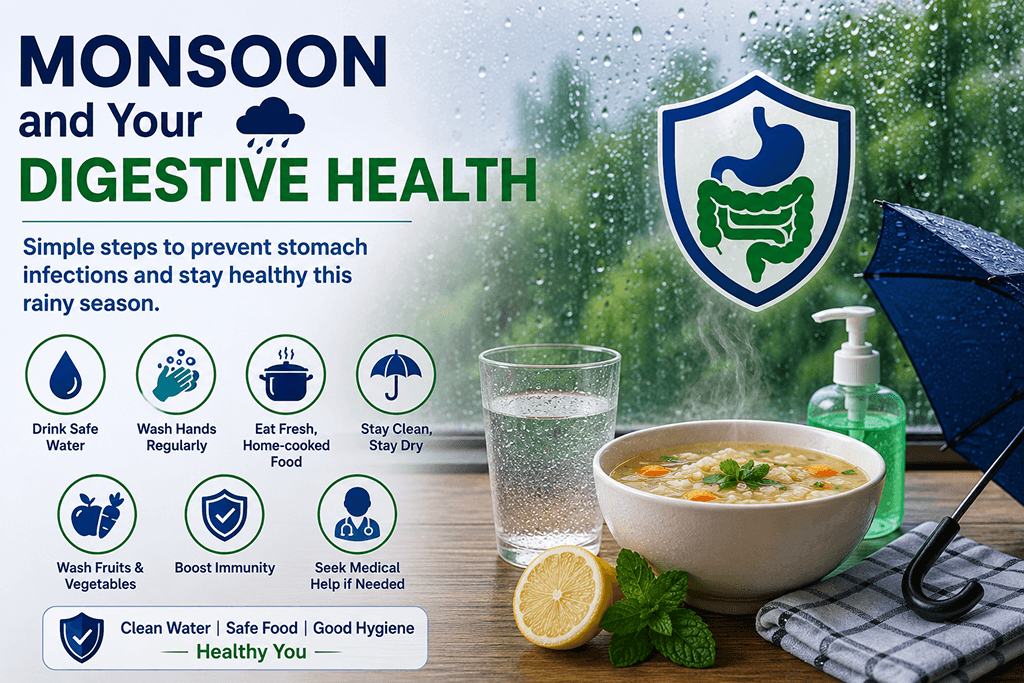
Heavy rainfall can affect water and sanitation systems. Floodwater may carry bacteria, viruses, parasites, and other contaminants. In some areas, sewage can mix with rainwater and increase the risk of contaminated drinking water.
Food can also become unsafe more quickly in warm and humid conditions. Street food, raw foods, uncovered meals, and food stored at the wrong temperature may increase the risk of stomach infection.
This is why digestive health during monsoon deserves special attention in Pakistan.
Common problems include:
Diarrhea is one of the most common digestive problems during the rainy season. It may occur after consuming contaminated food or water.
Symptoms can include:
The biggest concern with severe diarrhea is dehydration because the body loses water and important salts.
If diarrhea is severe, continues for several days, or is accompanied by blood in the stool or high fever, medical attention is important.
Food poisoning can happen when food contains harmful bacteria, viruses, parasites, or toxins.
During monsoon, food may become contaminated because of:
Symptoms may include vomiting, diarrhea, stomach pain, nausea, and fever.
Gastroenteritis means inflammation of the stomach and intestines. It can be caused by viruses, bacteria, or parasites.
A person with gastroenteritis may develop diarrhea, vomiting, abdominal cramps, nausea, and weakness.
In most mild cases, maintaining hydration is important. However, severe symptoms should not be ignored.
Unsafe water is an important concern during monsoon. Contaminated water can transmit infections such as typhoid, hepatitis A, cholera, and some parasitic infections.
Flooding can make the problem worse because dirty water may enter water sources or contaminate food preparation areas.
Clean drinking water is one of the easiest ways to protect your digestive system.
During the rainy season:
If you are unsure about the safety of your water supply, choose a reliable source of drinking water.
Always make sure your drinking water is safe. Boiled, properly filtered, or otherwise reliably treated water can reduce exposure to harmful microorganisms.
Wash your hands with soap and clean water:
Good hand hygiene can help reduce the spread of infections.
Street food is popular across Pakistan, but hygiene conditions can vary.
During monsoon, be especially careful with food that is:
Choose freshly prepared and thoroughly cooked food whenever possible.
Always wash fruits and vegetables properly with safe water before eating or preparing them.
Avoid eating raw foods that may have been washed with contaminated water.
Freshly cooked food is generally a safer choice during monsoon. Store leftovers correctly and avoid eating food that has been left outside for a long time.
Pay particular attention to meat, seafood, dairy products, cooked rice, and other foods that can spoil if not stored properly.
Ice may look clean but can still be made from unsafe water.
When eating outside, avoid ice if you are uncertain about the source of the water used to make it.
Diarrhea and vomiting can cause significant fluid loss. Drinking safe fluids is important, especially during illness.
Oral rehydration solution (ORS) may help replace fluids and electrolytes lost through diarrhea or vomiting.
Clean kitchen surfaces, utensils, cutting boards, and food containers regularly.
Keep raw meat separate from cooked foods to reduce cross-contamination.
Children can become dehydrated more quickly than adults. Parents should pay close attention to diarrhea, vomiting, fever, reduced urination, unusual sleepiness, or difficulty drinking fluids.
If symptoms are severe or persistent, consult a doctor promptly.
Many mild stomach problems improve with rest, fluids, and appropriate care. However, persistent or severe symptoms may require medical evaluation.
Understanding your digestive symptoms can also help you recognize when professional advice is needed. For additional information about common digestive symptoms and prevention, read Digestive Health Symptoms Prevention Islamabad.
There is no need to completely change your diet during monsoon, but food hygiene becomes especially important.
Be cautious with:
Instead, choose freshly prepared meals, clean drinking water, properly washed produce, and thoroughly cooked foods.
If you develop mild diarrhea, focus on preventing dehydration.
Drink safe fluids regularly. ORS can help replace water and electrolytes lost through diarrhea.
Eat light foods that you can tolerate and avoid foods that make your symptoms worse.
Do not start antibiotics without medical advice. Not every episode of diarrhea is caused by bacteria, and inappropriate antibiotic use can create other health problems.
You should seek medical care if you develop:
A temporary stomach upset may not require specialist care. However, persistent or severe digestive symptoms should be evaluated by a qualified doctor.
Consider consulting a Gastroenterologist Islamabad if you experience ongoing diarrhea, repeated vomiting, unexplained abdominal pain, blood in the stool, persistent bloating, jaundice, or recurring digestive problems.
A gastroenterologist can evaluate your symptoms and determine whether further tests or treatment are needed.
Families can reduce the risk of digestive infections by following a few basic habits.
Make sure everyone in the household:
These simple steps can make a major difference during the rainy season.
Monsoon itself does not directly cause every stomach problem. However, heavy rainfall, flooding, contaminated water, poor sanitation, unsafe food handling, and humid conditions can increase the risk of digestive infections.
Diarrhea can become more common when contaminated water or food contains bacteria, viruses, or parasites. Poor hygiene and sanitation can also contribute to the spread of infections.
Street food is not automatically unsafe, but hygiene conditions can vary. During monsoon, choose freshly cooked, hot food from clean and reputable places and avoid uncovered or raw foods from questionable sources.
Wash your hands, use safe water, cook food thoroughly, keep raw and cooked foods separate, store food correctly, and avoid food that has been left uncovered or unrefrigerated for too long.
Diarrhea can become dangerous when it causes dehydration or occurs with warning signs such as blood in the stool, severe abdominal pain, persistent vomiting, high fever, or significant weakness. Children and older adults may require particular attention.
Do not take antibiotics without medical advice. The cause of diarrhea needs to be considered before choosing treatment.
Monsoon is an important season for paying extra attention to digestive health in Pakistan. Unsafe water, contaminated food, poor hygiene, and improper food storage can increase the risk of diarrhea, food poisoning, gastroenteritis, and other stomach infections.
Protecting your digestive health does not require complicated steps. Drink safe water, wash your hands, eat freshly cooked food, keep food covered, and be careful with street food and ice from unknown sources.
Most importantly, do not ignore serious or persistent symptoms. Early medical evaluation can help identify the cause and prevent complications.
If you or a family member develops persistent diarrhea, repeated vomiting, severe abdominal pain, blood in the stool, dehydration, or other concerning digestive symptoms, consult a qualified gastroenterology specialist.
Need help with persistent digestive symptoms? Book an appointment with our gastroenterology specialists for expert evaluation, personalized guidance, and appropriate treatment.
