Every year, as the monsoon arrives in Pakistan, hospitals and clinics see a sharp rise in patients suffering from stomach infections, diarrhea, vomiting, and fever. Most of these illnesses are caused by contaminated water and food — and most of them are preventable.
This guide covers everything you need to know: which waterborne diseases are most common during monsoon, what their symptoms look like, when to seek specialist care, and how to protect your family.
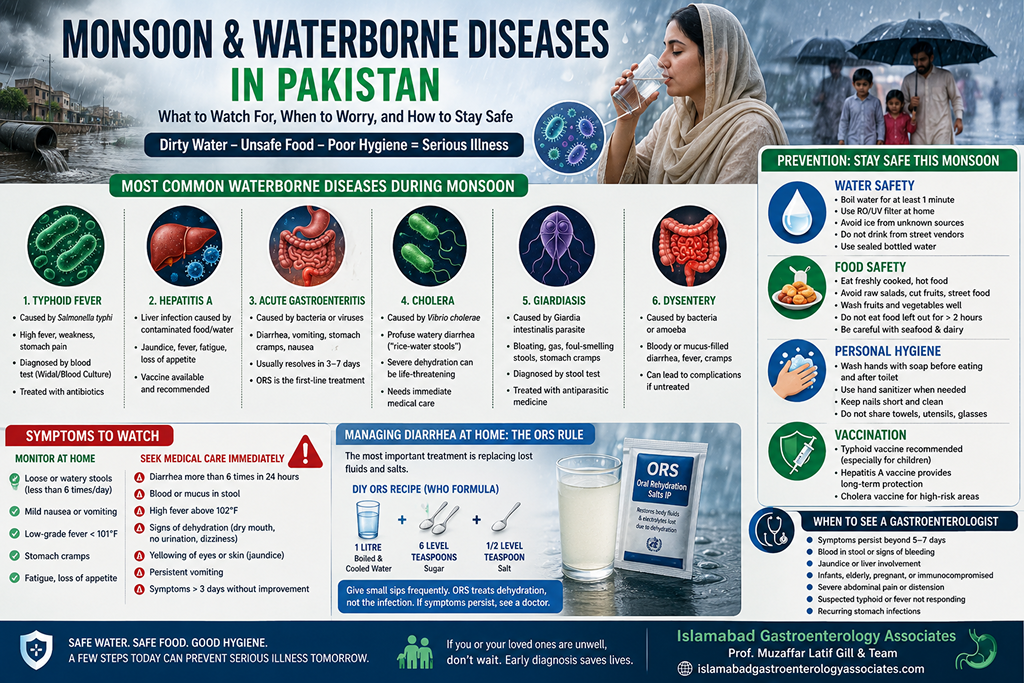
Monsoon rains bring relief from the heat — but they also create ideal conditions for the spread of waterborne infections. Here is why:
Key Fact: Diarrheal diseases spike by 30–50% during the monsoon season across Pakistan. The majority of cases are directly linked to contaminated drinking water.
These are the infections seen most frequently in gastroenterology practice every monsoon season.
Typhoid is one of the most serious monsoon-related illnesses in Pakistan. It is caused by Salmonella typhi, which enters the body through contaminated water or food. Without treatment, typhoid can lead to serious complications, including intestinal perforation.
Hepatitis A is a liver infection spread through contaminated water and food. Unlike Hepatitis B or C, it is not a chronic disease, but it can cause weeks of debilitating illness and, in rare cases, liver failure.
The most common monsoon illness. Gastroenteritis refers to inflammation of the stomach and intestines caused by bacteria (like E. coli or Salmonella) or viruses (like rotavirus or norovirus). It spreads rapidly in households.
Cholera is caused by the Vibrio cholerae bacterium and spreads through severely contaminated water. While less common in urban areas, outbreaks do occur in Pakistan during and after heavy flooding. Cholera can become life-threatening within hours.
Caused by the Giardia intestinalis parasite, this infection is often overlooked because its symptoms are less dramatic. However, it can persist for weeks and significantly affect quality of life.
Dysentery is caused by bacteria or amoeba and results in severe inflammation of the intestines. It is more serious than regular diarrhea and requires prompt medical attention.
Monitor at home if you have:
Seek medical care immediately if you have:
Also Read Summer Waterborne Diseases.
A gastroenterologist should be consulted when:
At Islamabad Gastroenterology Associates, we offer consultations for acute gastroenterological complaints during monsoon season. Prof. Muzaffar Latif Gill and our team are equipped to diagnose and treat typhoid, hepatitis, and complex bowel infections. Visit islamabadgastroenterologyassociates.com or call us to book an appointment.
For mild gastroenteritis, the most important treatment is replacing lost fluids and salts. Oral Rehydration Solution (ORS) is the gold standard.
DIY ORS Recipe (WHO Formula):
Mix 1 litre of boiled and cooled water + 6 level teaspoons of sugar + ½ teaspoon of salt. Stir until fully dissolved. Give small sips frequently. Commercial ORS sachets are available at all pharmacies and are even more precise.
Important: ORS treats dehydration — it does not cure the underlying infection. If symptoms worsen or do not improve within 48–72 hours, seek medical care.
Q: What are the most common waterborne diseases during monsoon in Pakistan?
A: The most common waterborne diseases during monsoon in Pakistan are typhoid fever, acute gastroenteritis, Hepatitis A, cholera, and giardiasis. These are primarily caused by contaminated drinking water and unsafe food — both of which become more dangerous during heavy rains when sewage systems overflow.
Q: How do I know if my diarrhea is serious or just a stomach bug?
A: If you are experiencing diarrhea more than 6 times a day, blood or mucus in the stool, high fever above 102°F, or signs of dehydration such as dry mouth or no urination — see a doctor immediately. Mild diarrhea with no blood and no high fever can usually be managed at home with ORS.
Q: What is the fastest way to recover from a monsoon stomach infection?
A: Start ORS immediately to prevent dehydration. Eat plain foods like khichdi, toast, or boiled rice. Avoid dairy, spicy, and fried foods until symptoms resolve. If symptoms do not improve within 48–72 hours, or if fever develops, see a doctor.
Q: Can typhoid be spread from person to person?
A: Typhoid spreads primarily through contaminated food and water, not direct contact. However, an infected person who does not wash their hands can contaminate food or surfaces and indirectly spread the bacteria. Good hand hygiene is critical.
Q: Is tap water in Pakistan safe to drink during the monsoon?
A: Tap water in most Pakistani cities is not reliably safe during the monsoon. Heavy rains can cause sewage overflow into water pipelines. Always boil tap water for at least 1 minute, use an RO or UV filter, or use sealed bottled water from a reputable brand.
Q: When should I take my child to a doctor for a stomach infection?
A: Take your child to a doctor immediately if they have not urinated in 6 or more hours, have blood in their stool, have a fever above 102°F, are unusually drowsy, cannot keep fluids down, or are under 1 year of age. Children dehydrate much faster than adults.
Monsoon is a beautiful season — but it demands extra caution with what you eat and drink. The good news is that the vast majority of waterborne diseases are entirely preventable with simple habits: boiling your water, washing your hands, and avoiding high-risk foods.
If you or a family member develops symptoms that concern you — persistent diarrhea, fever, jaundice, or signs of dehydration — do not wait. Early diagnosis and treatment make a significant difference in recovery time and outcomes.
Islamabad Gastroenterology Associates
Prof. Muzaffar Latif Gill & Team
islamabadgastroenterologyassociates.com
Specializing in: Typhoid, Hepatitis, Gastroenteritis, Bowel Disorders & More
This article is for informational purposes only and does not replace professional medical advice. If you are experiencing symptoms, please consult a qualified physician.
