Eating a lot of meat this Eid? Find out what happens inside your body — and what warning signs you should never ignore.
Every year during Eid al-Adha, millions of families across Pakistan gather to cook and eat meat — biryani, karahi, nihari, seekh kebab. It is a time of joy and celebration. But for many people, the Eid holidays also bring bloating, stomach pain, vomiting, and even food poisoning. In Pakistan’s extreme summer heat — where temperatures can reach 45°C — these problems become even worse. This guide will explain why your stomach struggles during Eid, what signs are serious, and how to enjoy Eid without suffering.
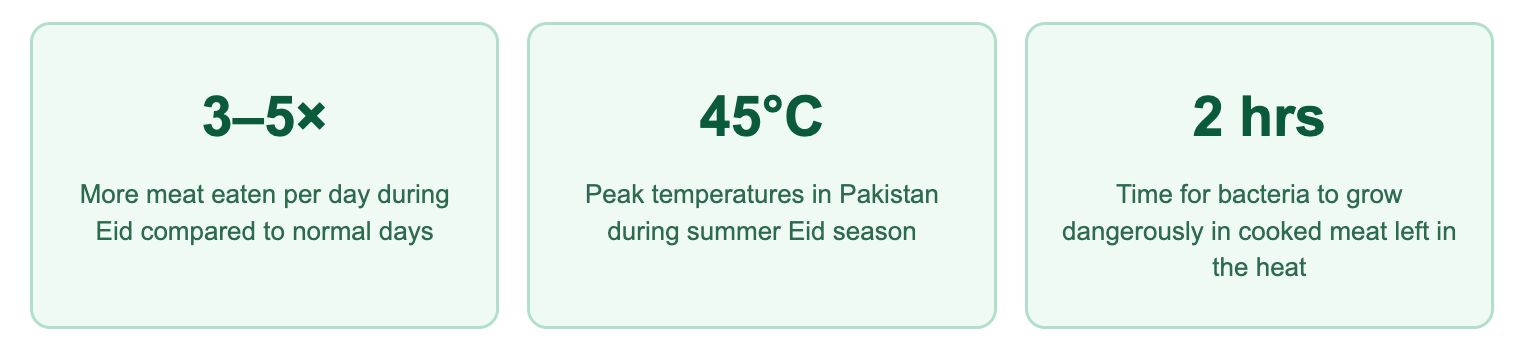
Your digestive system works like a machine. It is used to a routine — the same types of food, the same amounts, eaten at similar times every day. During Eid al-Adha, this routine is completely broken. Here is what changes:
Red meat — beef, mutton, and lamb — is harder to digest than chicken, fish, or vegetables. It takes your stomach and intestines much longer to break it down. When you suddenly eat large amounts of red meat for 2–3 days straight, your digestive system gets overloaded and struggles to keep up.
During normal days, most people eat 3 regular meals. During Eid, people often eat 4–6 times a day, at odd hours, with very large portions. This sudden change confuses your digestive system and can cause bloating, gas, and discomfort.
Eid meals are often rich in fat and protein but low in fiber (vegetables, fruits, salads). Fiber is what keeps your digestive system moving smoothly. Without it, food moves slowly through your intestines and causes constipation and gas.
Everyone is busy cooking, eating, and visiting family. People forget to drink enough water. In 40–45°C summer heat, your body loses water very fast through sweat. Dehydration makes digestion slower and harder and can cause serious problems.
These are the most common stomach complaints that gastroenterology clinics see every year, right after Eid al-Adha:
Your stomach feels tight, swollen, and full of gas. This happens when the digestive system is overloaded with fatty meat and cannot process food fast enough. You may also have frequent burping or passing of gas.
A burning feeling in your chest or throat. Rich, fatty meat and heavy spices cause your stomach to produce too much acid. Lying down after eating a big meal makes this worse. Many people mistake this for a heart problem.
Loose or watery stool, sometimes with stomach cramps. This can happen because of eating too much, food cooked in unhygienic conditions, or meat that was not stored properly in the heat.
Difficulty passing stool for 2–3 days. When you eat mostly meat with very little fiber or water, your intestines cannot push food through properly. This causes discomfort, heaviness, and abdominal pain.
Nausea, vomiting, fever, and severe stomach cramps. This happens when meat is not cooked fully, stored in the heat for too long, or prepared in unclean conditions. In summer, bacteria grow very fast in meat left outside.
If you already have a stomach ulcer or gastritis, eating spicy and fatty Eid foods can make it much worse. You may feel a burning pain in the upper stomach area, especially on an empty stomach.
Eid al-Adha falling in summer is a dangerous combination for digestive health. Here is exactly why the heat creates extra risk:
Some stomach problems after Eid are mild and get better on their own. But some are serious and need a doctor right away. Do not wait or ignore these signs:
⚠️ These symptoms are not normal “Eid stomach.” They can be signs of serious infection, internal bleeding, or liver problems. Please call 051-2287720 or visit Islamabad Gastroenterology Associates immediately.
You do not have to avoid meat to stay healthy during Eid. You just need to be smart about how you eat and store food. Follow these practical tips:
Older people have slower digestion and weaker immune systems. They are at higher risk of food poisoning, dehydration, and constipation. Make sure elderly family members eat smaller portions, drink plenty of water, and avoid very fatty or heavily spiced food. Watch for unusual tiredness or confusion, which can be signs of dehydration.
Children’s digestive systems cannot handle as much red meat as adults’. Give children smaller, well-cooked pieces. Make sure they eat fruits and drink water regularly. Diarrhea in young children during Eid can quickly become dangerous because they dehydrate very fast in the summer heat.
Pregnant women are more sensitive to food poisoning and must be extra careful about undercooked or poorly stored meat. Avoid rare or pink meat completely. They also need more water than usual, especially in the summer heat.
If you have conditions like gastric ulcer, hepatitis, fatty liver, irritable bowel syndrome (IBS), or Crohn’s disease, Eid can be a challenging time. Speak to your gastroenterologist before Eid about what foods to limit. Do not stop prescribed medication during the holidays.
Frequently Asked Questions
Q: Is it normal to have stomach pain after eating a lot of meat on Eid?
Mild bloating or a feeling of fullness is normal if you have eaten more than usual. However, severe pain that does not go away, pain with fever, or any blood in the stool is not normal and should be checked by a doctor right away.
Q: How long can I keep Qurbani meat in the refrigerator?
Raw Qurbani meat can be kept safely in the refrigerator for 3–5 days. In the freezer, it can last up to 3–4 months. Always store meat in clean, sealed bags or containers. In Pakistan’s summer, if the fridge is off for more than 4 hours due to load shedding, check the meat carefully before cooking.
Q: What can I take at home for bloating and indigestion after Eid?
For mild bloating, drinking warm water, ginger tea (adrak chai), or mint tea can help. Walking for 15–20 minutes after eating also helps digestion. Over-the-counter antacids can help with mild heartburn. If symptoms do not improve after 24 hours, please consult a doctor.
Q: My child has diarrhea after Eid — what should I do?
Give your child ORS (Oral Rehydration Solution) immediately to replace lost fluids. If the diarrhea is bloody, the child has a high fever, or diarrhea continues for more than 12–24 hours, take the child to a doctor right away. Young children can become severely dehydrated very quickly in summer heat.
Q: Can eating too much red meat damage the liver?
For healthy people, eating more meat for a few Eid days does not damage the liver. However, for people who already have fatty liver disease or hepatitis, excessive red meat and fat can put extra strain on the liver. Speak to your doctor if you have any liver conditions.
Don’t wait for the pain to get worse. Our specialist gastroenterologists are here to help — with same-week appointments available.
Consultation Fee: Rs. 4,000 | 9 Kaghan Road, F-8/3, Islamabad | islamabadgastroenterologyassociates.com
